

Staff Augmentation vs Fixed Price: Which Costs Less Over 12 Months?
Staff augmentation vs fixed price comes down to who carries the risk of change. Fixed price buys a defined scope for a defined amount, with the vendor absorbing estimate error. Staff augmentation buys capacity by the month, with you absorbing it. Over twelve months, the cheaper model is whichever one matches how stable your requirements actually are.
Most Indian buyers pick a contract model the way they pick a bank: whichever one the first vendor suggested. That choice quietly sets your budget ceiling, your change cost, your tax treatment and how fast you can stop spending. This post walks through the twelve-month arithmetic using published Indian benchmarks, then gives you the questions that decide it.
What each model actually commits you to
A fixed-scope project is a promise about output. You agree a specification, a price and a date. If the build takes 40 percent longer than the vendor estimated, that is the vendor’s loss. If you want something that was not in the specification, it becomes a change request and gets repriced.
Staff augmentation is a promise about input. You rent named engineers by the month. You get their calendar, not a deliverable. If the sprint produces less than you hoped, you still pay for the month. If you want to change direction on a Tuesday, nobody has to renegotiate anything.
Staff augmentation vs fixed price is not a discount question at all. They are two different places to put the same risk, and the price reflects it: a fixed-scope quote contains a buffer for the estimate being wrong, because the vendor has to survive the times it is.
| Dimension | Fixed-scope project | Staff augmentation |
|---|---|---|
| What you buy | A defined deliverable | Named people, billed monthly |
| Who absorbs estimate error | Vendor | You |
| Risk buffer in the price | Priced in, usually invisible | None |
| Cost of a mid-project change | Change request, repriced, often delayed | Absorbed in the next sprint |
| Stopping early | Milestone terms govern; usually no refund of work done | Serve notice, billing stops |
| Scaling up mid-build | Contract amendment | Add a person next month |
| Your management load | Low to moderate | High: you run the backlog |
| Who owns the estimate | Vendor | You |
| Works best when | Requirements are genuinely frozen | Requirements are still moving |
Staff augmentation vs fixed price over 12 months
Twelve months is the right window because it is long enough for the thing that actually drives cost to show up: scope change. The Project Management Institute found that 52 percent of projects experienced scope creep or uncontrolled change, up from 43 percent five years earlier. That is a coin flip, and it is the single number that should shape your contract choice.
If your project lands in the stable half, fixed scope is cheaper, because you paid a buffer you did not need but you also never paid for a change request. If it lands in the other half, fixed scope gets expensive in a way that does not show up in the original quote. Every change request carries three costs: the repriced work, the delay while it is negotiated, and the incentive it creates for the vendor to interpret the specification narrowly.
Staff augmentation has the opposite failure mode. Nothing stops you paying for months of capacity that produced little, because nobody outside your team is accountable for output. The model is only cheap if someone on your side owns the roadmap, writes the tickets and says no.
The in-house benchmark you should price against
Before comparing two vendor quotes, work out what the same team would cost you as employees. It is the floor everything else sits above.
Indeed’s India salary data, updated 31 August 2026 from 13.2 thousand reported salaries, puts the average software engineer base salary in India at about ₹8.9 lakh a year, with senior roles near ₹13.1 lakh and entry level around ₹4.1 lakh. Bengaluru and Gurgaon sit highest at roughly ₹10.3 lakh.
Base salary is not the cost. Add employer provident fund at 12 percent of basic wages, gratuity accrual, statutory insurance, a laptop and tooling, recruitment fees and the months of reduced output while someone ramps. Loaded cost for a senior engineer realistically lands 20 to 30 percent above base, before you count the manager time spent hiring. Confirm the exact statutory adders for your entity with your accountant, because the labour codes changed the arithmetic in late 2025.
This matters for the comparison because vendor rates in both models sit above loaded in-house cost. They have to: they include bench time, overhead and margin. What you are buying with that premium is speed of start, speed of stop, and somebody else’s hiring problem.
An illustrative 12-month comparison
The table below is illustrative arithmetic, not a quote. It uses the public salary benchmark above for the in-house column and a stated multiple for the vendor columns, so you can substitute your own rate card and rerun it. The team is one senior engineer, one mid-level engineer, one QA engineer and a project manager at quarter time.
| Line | In-house team | Staff augmentation | Fixed-scope project |
|---|---|---|---|
| Contracted commitment | Indefinite employment | Rolling monthly | One agreed total |
| Year-one people cost (illustrative) | ₹38 to ₹42 lakh loaded | ₹60 to ₹66 lakh billed | ₹68 to ₹78 lakh quoted |
| Recruitment and ramp | ₹4 to ₹8 lakh plus 2 to 4 months lost | Nil | Nil |
| Cost of three mid-build changes | Absorbed | Absorbed | Repriced, often 5 to 15 percent of contract |
| Cost of stopping at month 7 | Severance and idle team | Notice period only | Milestone terms; work paid for either way |
| Who is accountable for the date | You | You | Vendor |
| Attrition risk | Yours | Vendor’s, with replacement clause | Vendor’s |
Read the bottom half of that table, not the top. The headline people cost is the number buyers compare, and it is the number that matters least. A fixed-scope engagement that hits three significant changes can end the year above a staff augmentation engagement that started 15 percent cheaper per month. An in-house team looks cheapest of all until you count the four months you spent hiring it.
Five costs only one model carries
- Change request friction. Fixed scope only. Every change is a negotiation, and negotiation time is calendar time you are already paying for elsewhere.
- Idle capacity. Staff augmentation only. A month where your product decisions were not ready is a month you still pay for in full.
- Specification writing. Fixed scope only. Someone has to produce a specification detailed enough to be contractually binding, and that work is real, usually four to eight weeks for a serious build.
- Backlog ownership. Staff augmentation only. Budget a genuine product owner on your side, not a manager doing it in evenings.
- Knowledge loss at handover. Both, but differently. Fixed-scope teams disperse on delivery. Augmented teams disperse when you stop the retainer. Ask about documentation and handover in the contract, not after.
TDS, GST and the labour codes
The contract model changes your compliance paperwork, and in one case your withholding rate.
GST is the same story in both models: a registered Indian vendor charges GST on the invoice either way, and if you are registered you take input credit either way. It is not a differentiator.
TDS can be. Payments to a contractor and fees for technical or professional services fall under different sections at different rates. The Income Tax Department’s published chart for assessment year 2026-27 shows Section 194C at 1 percent for individuals and HUFs and 2 percent for others, and Section 194J at 2 percent for fees for technical services and 10 percent for other covered sums. Which section applies depends on the substance of the arrangement, not on what the invoice calls it. Get your CA to classify it before the first payment, not at year end, because reclassification later means interest and a reconciliation exercise.
The labour codes are the third piece, and they are new enough that most cost models have not caught up. The Government of India brought all four labour codes into force on 21 November 2025, and among the changes, fixed-term employees now become eligible for gratuity after one year of service instead of five, with benefits equal to permanent staff. If your plan was to hire a short-term contract team to deliver a fixed-scope build and release them, that plan now costs more than it did in 2024. It pushes the calculation toward a vendor engagement, where the employment obligations sit with the vendor.
When staff augmentation vs fixed price tips each way
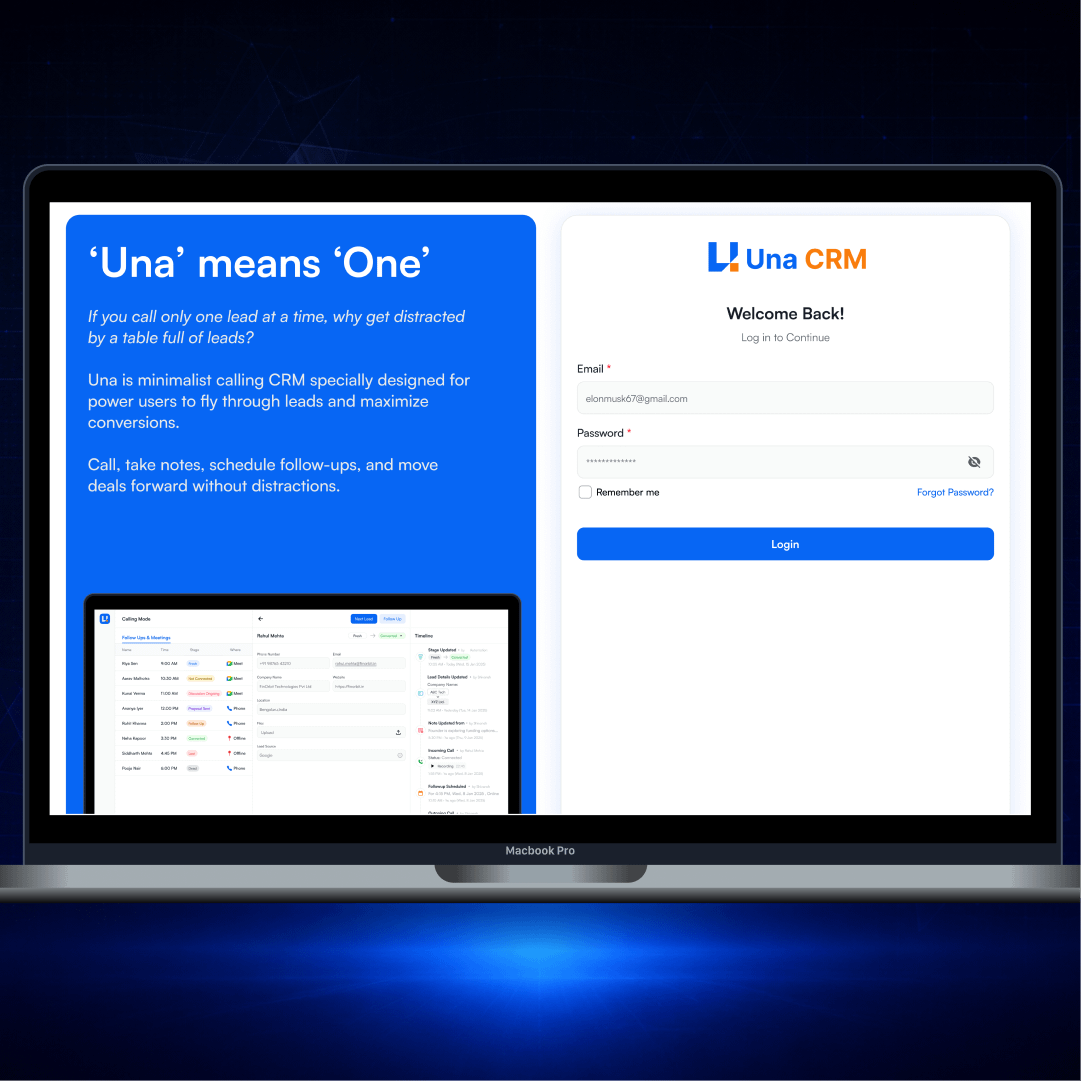
Choose fixed scope when you can write the specification down and defend it. Regulatory and compliance builds are the clearest case: the requirement is written by someone other than you, it does not change because a user complained, and the acceptance criteria are objective. Integrations against a documented third-party API are another. So is a well-understood second product built on a pattern you have already shipped. UNA-CRM, a deliberately minimal calling CRM, is the shape of product that suits a fixed scope: single purpose, few branches, a specification you can actually finish writing.
Choose staff augmentation when the specification is a hypothesis. Anything with real users whose behaviour you have not observed yet, anything where the business model is still being tested, anything where a competitor’s move next quarter could change your roadmap. Also choose it when you need a specific skill for a bounded period, a DevOps engineer for a migration or a mobile developer to get one release out, and hiring for it permanently makes no sense.
The honest tie-breaker in staff augmentation vs fixed price: if you cannot name the person on your side who will own the backlog every week for twelve months, do not choose staff augmentation. You will pay retainer rates for drift.
The hybrid most teams land on
In practice the answer to staff augmentation vs fixed price is often neither on its own. Fix the scope for phase one, then move to capacity.
Phase one is a fixed-price discovery and MVP with a hard ceiling and a defined deliverable, typically eight to sixteen weeks. It forces the specification to be written, it gives you a real date, and it lets you evaluate the vendor on delivered work rather than a sales call. Our breakdown of what an MVP actually costs in India, stage by stage covers how to size that first phase honestly.
Once the product is live and users are telling you things the specification did not anticipate, convert the same team to a monthly retainer. You keep the people who already have context, which is where most of the value in an augmented team sits, and you stop paying change-request friction on every learning.
The one thing to settle before phase one starts is the conversion price and the notice period. Agreeing the monthly rate while the vendor is still competing for the work is a very different conversation from agreeing it when they are the only team who knows the codebase.
Nine questions to ask before you sign
- What is the notice period to reduce or stop the engagement, and does it differ per person?
- If an engineer leaves the vendor mid-engagement, what is the replacement commitment and who pays for the new person’s ramp-up?
- Under a fixed price, what specifically counts as a change request, and what is the rate applied to one?
- Are the people named in the proposal the people who will actually work, and are they dedicated or shared across accounts?
- Who owns the IP, and at what point does it transfer? On payment, on delivery, or on final milestone?
- What is the vendor’s position on repository access and CI credentials, and can you revoke them unilaterally?
- Which TDS section does the vendor expect you to apply, and have both CAs agreed?
- What documentation is contractually required at handover, and is a milestone payment tied to it?
- What happens to the price if you add a fourth engineer in month five, and is that rate locked now?
If a vendor cannot answer questions one, three and five in writing, the contract model is not your biggest problem. The 12-point checklist for choosing a software development company in Delhi NCR covers the rest of the due diligence, and our note on mobile app development cost in India shows how the same scope question drives app budgets.
Working out which model fits your build
If you already have a written specification and a date you have to hit, ask for a fixed-scope quote and read the change request clause first. If you are still learning what to build, rent the team and keep the roadmap. If you are somewhere in between, which is most people, fix phase one and convert.
AY Technologies runs both models from New Delhi. Send us your scope, or the fact that you do not have one yet, and we will tell you which engagement makes sense and what it costs. Start with our IT staff augmentation services page, or write to us with the twelve-month outcome you are trying to reach.
[…] For the full twelve-month arithmetic, read staff augmentation vs fixed price: which costs less over 12 months. […]